Choose timezone
Your profile timezone:
Events in our system are self-managed. Group and event managers are encouraged to review privacy and security settings, and adjust them if needed. If you need assistance please contact Indico Support - contact Help at bottom of page. https://learn.getindico.io/categories/managing/
TRIUMF, Canada's national particle accelerator centre, will host the ARIEL (Advanced Rare IsotopE Laboratory) Science Workshop from April 20 - 23, 2026!
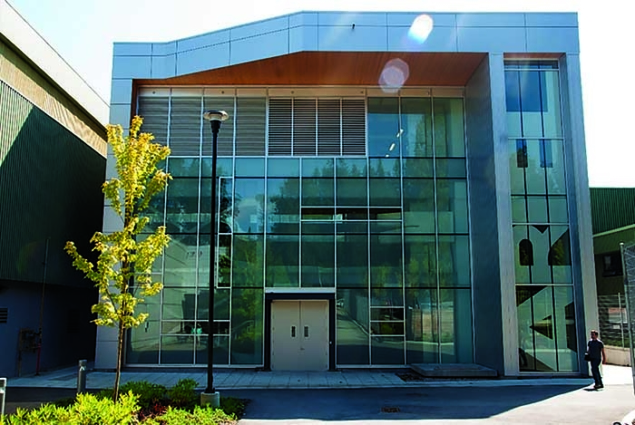
The ARIEL (Advanced Rare IsotopE Laboratory) Science workshop will be held at TRIUMF in the Auditorium.
The ARIEL facility will begin a phased commissioning of the equipment and beamlines starting from 2027. This will bring access to enhanced rare-isotope-beams (RIB) capabilities at TRIUMF with multidisciplinary benefit for nuclear-physics, material-science and life-sciences programs. The unique feature of ARIEL will be the operation of three simultaneous rare isotope beamlines.
There will be new capability of production of neutron-rich species using electron-induced photofission with a 30 MeV and up to 10 mA electron beam (eLINAC), on a new advanced electron target station. There will be an additional second proton beamline leading to a new proton target station. For beam preparation and delivery there will be a new ARIEL Laser Ion Source capability, an electron beam ion source (EBIS) for the production of pulsed, highly charged beams with high efficiency, and a high-resolution mass separator.
The establishment of these beamlines and facilities will allow simultaneous delivery of RIB to three separate experiments, two to the low-energy area for stopped and trapped beams and one to the ISAC linear accelerator path for re-accelerated rare isotope beams of energies ranging from 0.15 MeV/u to 16.5 MeV/u.
For the best scientific exploitation of this new era of rare isotopes at TRIUMF, we wish to invite the global community to participate in the ARIEL Science Workshop to explore experiment ideas for ARIEL-enabled science. This workshop will be devoted to nuclear science.
The scientific program will consist of invited oral and contributed poster presentations as well as round table discussion sessions. The workshop will aim to build collaborations to prepare for the first experiments with ARIEL and to explore the development of new instrumentation for experiments.
We look forward to welcoming you at TRIUMF!
TRIUMF is located on the traditional, ancestral, and unceded territory of the xwməθkwəy'əm (Musqueam) People, who for millennia have passed on their culture, history, and traditions from one generation to the next on this site.
If you want to learn more about the Musqueam's Story, see here.
If you want to learn more about Indigenous territories, treaties and languages, check out the Native Land maps here.
Illuminating stellar explosions with ARIEL
Reactions induced by alpha-particles that result in the emission of neutrons play a critical role across multiple disciplines of fundamental and applied nuclear physics. However, essential cross-section data for many key (α,n) reactions are either discrepant or entirely unmeasured. In nuclear astrophysics, this deficiency severely impacts models that describe how heavy elements are formed during stellar burning, e.g. via the s-process in massive stars [1,2], and explosive environments, such as neutrino-driven winds of supernovae and neutron star mergers [3]. This problem is especially pronounced for the latter scenario, where entirely unmeasured (α,n) reactions on radioactive nuclei strongly influence the path of a “weak” r-process [4]. However, with the ARIEL upgrade, TRIUMF is uniquely well-placed to provide essential data underpinning nucleosynthesis in both the weak r-process and s-process. Recently, a proof-of-concept measurement was published that demonstrated the use a recoil spectrometer (EMMA) and HPGe array (TIGRESS) to study (α,n) reactions with radioactive beams [5], made possible by newly developed nanomaterial targets [6]. This study has now opened the door for a new experimental programme in weak r-process reaction studies, bolstered by improved selectivity from compact neutron detectors and, through the ARIEL upgrade, clean, neutron-rich beams with efficient charge-breeding. Meanwhile, the DRAGON facility provides an excellent tool to study (α,n) reactions in stellar burning scenarios, again with improved selectivity from neutron detectors (DEMAND array) to expand capabilities beyond radiative capture. In this talk, I will present recent efforts towards an (α,n) reaction programme using facilities in both the ISAC-I and ISAC-II halls, highlighting the many benefits provided by the ARIEL upgrade.
[1] M. Wiescher, et al., Eur. Phys. J. A 59, 11(2023).
[2] J. Frost-Schenk, et al., MNRAS 514, 2650–2657 (2022).
[3] J. Bliss, et al., J. Phys. G 44, 054003 (2017).
[4] A. Psaltis, et al., ApJ 935 27 (2022).
[5] M. Williams, et al., PRL 134(11) 112701 (2025)
[6] V. Godinho, et al., ACS omega 1(6) 1229-1238 (2016).
One of the biggest questions in nuclear astrophysics regards how elements are synthesized in stellar environments. Observations of astrophysical phenomena provide us with evidence for different nucleosynthesis processes, and modelling these astrophysical scenarios requires a detailed description of the complex nuclear physics that is involved. Radioactive decay, nuclear reactions, and the properties of individual nuclei are required to fully understand the origin of the elements, and substantial experimental and theoretical progress has been made to address this question. On the neutron-rich side of stability, neutron-capture processes such as the slow (s), intermediate (i), and rapid (r) processes play a pivotal role in our understanding of the origin of heavy elements. Direct neutron-capture measurements are infeasible for the short-lived nuclei involved in these processes, and therefore indirect neutron-capture techniques are needed. In this presentation I will discuss indirect neutron-capture techniques that have been developed over the last few years and how they can be applied to constrain reactions relevant to r-process nucleosynthesis.
Decay Spectroscopy with GRIFFIN
Beta-delayed neutron emission is an important decay mode for very neutron-rich nuclei. For the highly asymmetric nuclei, nuclear structure and large decay energies can affect neutron emission probabilities.
Experiments at the ISOLDE Decay Station (IDS) and the FRIB Decay Station Initiator (FDSi) provided a wealth of new data, leading to spectroscopy of beta-delayed two-neutron emission [Dys25], new cases of neutron-gamma competition [Pie21, Xu23], and observations of non-statistical effects [Xu24, Bra26]. The data do not necessarily agree with the established models for this process, and to make reliable predictions of neutron-emission branching ratios for more exotic r-process nuclei, the inconsistencies need to be understood. The experimental data are still scarce and scattered, but measurements on exotic isotopes are essential for developing a better model of beta-delayed neutron emission.
This work is supported in part by the U.S. Department of Energy, Office of Science, Office of Nuclear Physics under Contract No. DE-FG02-96ER40983 (UTK), by the Stewardship Science Academic Alliances program through DOE Award No. DE-NA0003899 and NSF Major Research Instrumentation Program Award No. 1919735.
[Bra26] N. Braukman et al., Decay of 44S, in preparation.
[Dys25] P.Dyszel Phys. Rev. Lett. 135, 152501 (2025).
[Xu23] Z. Xu et al., Phys. Rev. Lett. 133, 042501 (2024).
[Xu24] Z. Y. Xu et al., Phys. Rev. Lett. 131, 022501 (2023).
[Pie21] M. Piersa-Siłkowska et al. , Phys. Rev. C 104, 044328 (2021).
Beta-decay spectroscopy is a uniquely powerful probe, permitting often first experimental access to the excited states of exotic nuclei, but also a breadth of rich and detailed information when statistics permits. The experimental facilities at TRIUMF, combined with new beams delivered from ARIEL, are an exciting combination for future decay measurements. I will discuss some of the compelling physics topics decay spectroscopy can provide insights into, such as shell evolution and the impacts of weak binding, and focus on potential cases of interest enabled for study by ARIEL.
TIGRESS has been used successfully over the past decade for nuclear structure studies using Coulomb excitation, coupled to the BAMBINO array of dual silicon detectors. I will briefly introduce the method, the benefits of the experimental setup and highlight some recent successes. I will then discuss future opportunities for the programme, focussing on the new capabilities that ARIEL will deliver.
Transfer reactions provide a powerful and selective tool to probe the
microscopic structure of atomic nuclei. In particular, they are
sensitive to single-particle occupancies and wave-function overlaps,
offering direct insight into the interplay between single-particle and
collective degrees of freedom. This makes them ideally suited to
investigate shape coexistence in nuclei.
In this talk, I will give a brief introduction to transfer reactions and
discuss recent measurements using radioactive ion beams. Special
emphasis will be placed on two-neutron transfer reactions, which are
particularly sensitive to shape coexistence and configuration mixing. I
will outline future prospects for transfer-reaction studies at
next-generation facilities, with a focus on the ARIEL project at TRIUMF.
The increased beam intensities and extended isotope reach will open new
opportunities for systematic investigations of shape coexistence in
neutron-rich nuclei.
Octupole-deformed nuclei represent quantum many-body systems in which spatial reflection symmetry is broken in the body-fixed frame, while the symmetry must be restored in the laboratory frame. Such nuclei therefore provide a unique opportunity to investigate fundamental symmetry properties in atomic nuclei. However, the nature of octupole deformation remains insufficiently understood because most nuclei possessing octupole “magic numbers” are radioactive and experimentally difficult to access.
In the region around Z∼56 and N∼88, near the doubly octupole-magic nucleus 144Ba, theoretical studies predict a systematic evolution of octupole deformation. In particular, both the emergence and disappearance of octupole collectivity are expected to occur as a result of the competition between quadrupole and octupole correlations.
At RIBF, using the energy-degrading and focusing device OED, we plan to investigate the evolution of octupole collectivity in neutron-rich Ce isotopes. For Ba isotopes, however, theoretical predictions indicate that the boundary of stable octupole deformation extends up to 150Ba, which is presently beyond the experimental reach of RIBF. Therefore, we propose an experiment aimed at studying the octupole collectivity in neutron-rich Ba isotopes in order to clarify the evolution and limits of octupole deformation in this key mass region.
In this experiment, proton- and deuteron-induced inelastic scattering, together with Coulomb excitation, will be performed using re-accelerated radioactive ion beams. These complementary probes enable a systematic investigation of octupole and quadrupole collectivity through the measurement of transition strengths and excitation properties.
The XT03 beamline at HIE ISOLDE provides a versatile station for reaction studies, centred on the SEC chamber, which has hosted numerous experiments during its first decade of operation. Halo nuclei such as ¹¹Li and ¹⁴Be offer a unique opportunity to investigate di neutron correlations and the evolution of shell structure in light neutron rich systems.
The ground state of ¹¹Li contains mixed p, s, and d components, and its low energy continuum shows broad dipole type strength together with narrower resonances at higher excitation energies. However, the lowest resonance near 1 MeV remains poorly constrained. Studies of the N = 7–8 isotonic chains reveal significant shifts of the neutron orbitals, leading to the ½⁺/½⁻ inversion in ¹¹Be and the breakdown of the N = 8 magic number in ¹²Be, highlighting the need for reliable information on the unbound nucleus ¹³Be.
Transfer reactions with radioactive beams in inverse kinematics provide a sensitive probe of these structures. Two neutron transfer from ⁹Li is predicted to populate selectively the ground and low lying excited states of ¹¹Li. At ISOLDE, we investigate (t,p) reactions on ⁹Li and ¹¹Be at 7 MeV/u and 5.4 MeV/u to study the low energy excitations of ¹¹Li and the resonant states of ¹³Be. This contribution presents the SEC setup and the first results from these measurements.
A wealth of experimental data supports the important role played by pairing correlations in atomic nuclei. In analogy to superconductors, nuclear "Cooper pairs” have a strong influence on many properties such as binding energies, excitation spectra, deformations, moments of inertia, etc.
The study of pairing correlations in exotic nuclei is a subject of active research in nuclear structure. Specific areas include: i) The role of isovector pairing in neutron-rich isotopes, where the effects of weak binding and continuum coupling are expected to be important, ii) The competition of isovector and isoscalar neutron-proton pairing in N=Z nuclei, and iii) The delicate balance between single-particle degrees of freedom and pairing and quadrupole correlations in the Islands of Inversion.
It is well established that direct single- and two-nucleon direct transfer reactions are unique tools to understand pairing correlations in nuclei as they are particularly suited to probe the quasi-particle nature and the two-nucleon pair density by determining occupancies (spectroscopic factors) and two-nucleon amplitudes (TNA) respectively.
The ARIEL facility will provide access to enhanced rare-isotope-beams capabilities at TRIUMF, with energies up to 16.5 MeV/u. These beams and existing (and to be developed) state-of-the art instrumentation will enable a vibrant research program to study pairing correlations in exotic nuclei with transfer reactions.
In this presentation we will discuss some examples addressing the three areas mentioned above to showcase the opportunities that ARIEL will offer on this topic.
*This work was supported by the U.S. Department of Energy under Contract No. DE-AC05-00OR22725 with UT-Battelle, LLC.
The ACTAR TPC device is a time projection chamber, developed for nuclear physics experiments,that allows for the 3D tracking of charged particles in an active gas volume. It has been used since 2019 during several campaigns at GANIL (Caen, France), and in 2025 at TRIUMF (Vancouver, Canada). The detector was designed to work as an active target (the gas acts as a target for nuclear reaction) or in implantation-decay mode. Experiments in both mode have been carried out. The principle of these experiments is to extract the physics information for the 3D reconstruction of the tracks ions and particles involved in nuclear reactions or decays.
The active target mode allows studying several types of reactions to address nuclear structure properties of exotic nuclei and/or unbound states. So far, experiments involving elastic and inelastic scattering transfer and charge exchange reactions have been performed.
The device is also well suited for exotic decay studies involving proton(s) emission. The decaying nuclei are implanted in the active volume, where the decay occurs and the trajectories of emitted particles are analyzed.
Typical studies and recent results obtained in experiments performed with this detector will be presented together with possible future studies to be performed at ARIEL
Precision measurements of the final-state products in nuclear beta decay and electron capture (EC) decay processes can be used as powerful laboratories to search for beyond standard model (BSM) physics from the meV to TeV scale, as well as for targeting fundamental questions of quantum mechanics at the subatomic scale. For the past seven years, the BeEST (Beryllium Electron capture in Superconducting Tunnel Junctions (STJs)) collaboration has taken the approach of embedding electron-capture (EC) decaying radioisotopes produced at TRIUMF in thin-film STJs to precisely measure the recoiling atom that gets an eV-scale “kick" from the neutrino following EC decay. Since these recoils must conserve energy and momentum with the neutrino, they carry unique (and potentially “hidden") signatures of weakly coupled BSM physics. As such, nuclear recoil spectroscopy of EC decaying isotopes has shown tremendous promise in our search for signatures of BSM physics including neutrino mass, exotic weak currents, and potential “dark” particles created within the Q-value window of the decay; including neutrino mass, exotic weak currents, and potential “dark" particles created within the 𝑄-value window of the decay. Such measurements provide a complimentary and (crucially) model-independent portal to the dark sector with sensitivities that push towards synergy between laboratory and cosmological probes.
I will introduce the experimental concept and extensions of the research program before discussing prospects for the experimental program in the ARIEL era.
SALER (Superconducting Array for Low-Energy Radiation) is a new experimental platform that uses superconducting sensors to study radioactive decay through direct detection of eV-scale nuclear recoil and other low-energy observables. The approach has already been developed and tested in the rare-isotope environment at FRIB, establishing its promise as a powerful new tool for precision decay studies. ARIEL offers an exciting opportunity to extend this capability to a broad and complementary range of isotopes and science cases, including weak-interaction studies, tests of fundamental symmetries, and questions in nuclear structure and astrophysics. In this talk, I will discuss the SALER concept, its demonstrated progress to date, and the prospects for a future program at ARIEL.
Many experiments at radioactive ion beam (RIB) facilities require isobarically and isomerically pure beams at high ion intensities. Over the years, Multi-Reflection Time-of-Flight (MR-ToF) devices have gained remarkable attention for mass separation of short-lived radionuclides. They exceed mass resolving powers of m/Δm =1e5 within a few (tens of) milliseconds. Space charge effects, however, pose a challenge for the mass separation in cases where excessively many ions are confined in the MR-ToF device. This limits the wider application of MR-ToF mass separators at RIB facilities.
By performing ion-optical simulations including space charge effects, we have shown that the ion flux in MR-ToF devices can be increased by more than two orders of magnitude when raising the kinetic energy of the stored ions and when improving the geometrical design [1-4]. According to our simulations, an ion flux between 5e7 to 1e5 ions/s will become possible for mass resolving powers between 1e4 and 5e5 assuming an energy of 30 keV of the stored ions.
In this contribution, we present an overview of highly selective and high-flux mass separation and discuss the relevance of high-voltage MR-ToF devices for next-generation RIB facilities such as ARIEL. We report the first experimental results of MIRACLS’ 15 keV MR-ToF device [5], which enabled highly sensitive fluorescence-based collinear laser spectroscopy (CLS) of exotic Mg and Cd ions. The latter’s combination of MR-ToF and CLS has recently also enabled a multi-order enhancement in the sensitivity of electron-affinity measurements [6], allowing the determination of this quantity for heavy and superheavy elements. Furthermore, we discuss the design of FRIB’s proposed 30 keV MR-ToF mass separator, which will enable both high mass resolving power and high ion throughput [3,4]. We will highlight its potential for both FRIB and ARIEL to enable new experimental opportunities.
[1] F.M.Maier et al, NIMA 1056, 168545 (2023).
[2] F.M.Maier et al, NIMA 1075, 170365 (2025).
[3] F. M. Maier, C. M. Ireland et al., NIMA 1084, 171220 (2026).
[4] C. M. Ireland, F. M. Maier et al., NIMA 1087, 171426 (2026).
[5] F. M. Maier, M. Vilen et al., NIMA 1048, 1679277 (2023).
[6] F. M. Maier, E. Leistenschneider et al., Nat. Commun. 16, 9576 (2025).
Precision mass measurements of exotic nuclei provide a direct and model-independent probe of nuclear structure, giving access to binding energies and derived observables such as two-neutron separation energies, shell-gap indicators, and odd-even staggering. At TRIUMF-ISAC, these techniques have enabled detailed studies of neutron-rich nuclei relevant to shell evolution, deformation, and the astrophysical
r-process. In this contribution, we will present recent precision mass measurements of neutron-rich isotopes, including our work on Sn isotopes beyond N=82 and on heavy neutron-rich Yb isotopes. These results illustrate how high-precision masses can reveal the persistence and evolution of shell structure, and identify structural reorganisation in the rare-earth region approaching a predicted N∼116 shape-transition region. Beyond their importance for nuclear structure, such measurements provide key experimental input for r-process calculations through neutron-separation energies and decay Q values.
We will discuss several science opportunities for precision mass measurements in the ARIEL era, particularly in neutron-rich regions where progress depends on sustained beam access and more systematic campaigns across isotopic chains. Two especially promising directions are the extension of mass measurements below 132Sn, for example in the In, Ag, and Pd chains, to probe the evolution of shell structure below Z=50 and improve constraints on nuclei feeding the second r-process peak, and expanded studies of neutron-rich rare-earth nuclei, towards the Tb-Lu region, to map the evolution of deformation and pairing and to constrain the mass surface relevant for rare-earth peak formation. The emphasis will be on how precision masses, combined with complementary spectroscopy, can address open questions in neutron-rich nuclear structure and nucleosynthesis in the years ahead.
Tackling the increasing challenge to determine the mass of isotopes having low production yields and short half-lives, multi-reflection time-of- flight (MRTOF) mass spectrometry has grown from an initially rarely-used technology to the world's most commonly-used method for measurements with a relative mass precision down to $\delta m / m = 10^{-8}$. This technology has been developed at RIKEN’s RIBF facility for about two decades in combination with gas-filled ion catchers for low-energy access of isotopes produced by the in-flight method.
In the recent years, three independent systems operating at different access points at RIBF, have provided substantial data in the medium- and heavy-mass region of the nuclear chart, reaching out to the superheavy nuclides. Recent achievements like high mass resolving power [1] followed by the development of α/β-TOF detectors [2] and in-MRTOF ion selection have tremendously increased the selectivity of the systems [3]. The combined application allows for background-free identification of the rarest isotopes.
In this contribution, I will give a short overview about the success of MRTOF atomic mass measurements using BigRIPS in the recent past [4]. I will discuss instrumentation plans, with a view to a new type of $\beta$-TOF detector potentially useful for future mass measurements using ARIEL. Furthermore I will discuss challenges for the analysis of contaminated spectra with a low rate of wanted events.
References:
[1] M. Rosenbusch et al., Nucl. Instrum. Meth. A 1047, 167824 (2023).
[2] T. Niwase et al., Theo. Exp. Phys. 2023(3), 031H01 (2023).
[3] W. Xian, M. Rosenbusch, V. H. Phong et al., Front. Phys. 13 (2025).
[4] S. Kimura et al., Phys. Rev. Lett. 135, 152701 (2025).
The multiple-reflection time-of-flight mass spectrometer (MR-TOF-MS) has been part of the TRIUMF’s Ion Trap for Atomic and Nuclear Science for about 9 years. Coupled to the ISAC facility for the delivery of rare isotope beams (RIBs) plenty of results have been shown, from extending the landscape of known nuclear masses to aiding for the development of ion sources and targets. Within the ARIEL era, extreme neutron rich nuclei will be produced via photofission with more rate and with less isobaric contamination compared to ISAC yields. ARIEL production rates employing photofission together with the already demonstrated capabilities of the MR-TOF-MS for supressing contaminants via re-trapping, open opportunities of further expanding the known nuclear masses towards neutron rich nuclei in the light and heavy fission peaks. Also, the MR-TOF-MS will enable real-time yield measurements and beam composition characterization, which will enable characterization and optimization of the new production targets (APTW and AETE) and enable new developments.
In this presentation I will give a brief overview of the MR-TOF-MS technique and its achievements in TRIUMF coupled to the ISAC facility and an outlook for the opportunities of the MR-TOF-MS in the ARIEL era.
This talk will discuss ab initio calculations around neutron-rich shell closures relevant for the evolution of shell structure, for electromagnetic moments, as well as for nuclear masses and beta decays for the r-process.
N/A
Reactions populating unbound states, such as transfer, breakup or knockout, provide valuable spectroscopic information of weakly bound nuclei. Extraction of meaningful information from these reactions require the combination of a suitable reaction framework, tailored to the reaction at hand, with a realistic structure model for the involved nuclei.
In this presentation, I will discuss some examples of this type of reactions, covering a variety of situations. Firstly, I will present the case of $^{9}$Li(d,p)$^{10}$Li, measured at ISOLDE [1] and TRIUMF [2]. The angular distribution of outgoing protons and the excitation energy spectrum of $^{10}$Li can be well described by DWBA and CCBA calculations combined with a relatively simple structure model of the $^{10}$Li system, comprising $s$-wave virtual state and a $p$-wave resonance. Above $\sim$2 MeV, the data suggest the presence of $d$-wave strength [3,4]
As a second example, I will discuss the case of $^{17}$C, recently studied at GANIL [5] by means of the $^{16}$C(d,p)$^{17}$C reaction. In this case, the description of the excitation spectrum can be also well described with the inclusion of $s$ and $d$ waves, but requires a more elaborate structure model, including core deformation and Pauli blocking effects arising from the open shell nature of the $^{16}$C {\it core}.
Finally, I will move to the case of the population of high-lying excited states, usually leading to inclusive measurements in which many partial waves are potentially involved and isolated states are not resolved. In this case, the modeling can be efficiently and elegantly performed making use of the Ichimura-Austern-Vincent (IAV) model [6], in which the states of the participant+target system are described in terms of an effective, complex potential, akin to that used in optical model calculations for elastic scattering. I will present some of examples of these inclusive, stripping reactions and stress their application to surrogate and incomplete fusion.
[1] H.B. Jeppesen, et al., Phys. Lett. B642, 449 (2006).
[2] M. Cavallaro et al., Phys. Rev. Lett. 118, 012701 (2017).
[3] A.M. Moro, J. Casal, M. Gomez-Ramos, Phys. Lett. B 793, 13 (2019).
[4] F. Barranco, G. Potel, E. Vigezzi, and R. A. Broglia, Phys. Rev. C 101, 031305(R) (2020).
[5] Lois-Fuentes et al. Phys. Lett. B867, 139600 (2025).
[6] M. Ichimura, N. Austern, and C. M. Vincent, Phys. Rev. C 32, 431 (1985).
FrX: Nuclear CP violation searches in francium molecules
To achieve experimental breakthroughs in quantum gravity, there is significant interest in searching for violations of the gravitational inverse-square law—probing large extra dimensions predicted by string theory—as well as violations of Lorentz symmetry. This talk presents recent progress and upcoming experimental projects in these fields. In particular, we will discuss testing Lorentz invariance by investigating the time variation in the lifetimes of polarized unstable particles and nuclei, with a focus on next-generation projects at the ARIEL facility.
The experimental nuclear physics program at Central Michigan University encompasses the pillars of low energy nuclear science, including applications to astrophysics, nuclear structure and fundamental symmetries. In this presentation we will describe the current research program at CMU and possibilities for future experiments that will combine the capabilities of the ARIEL facility and the existing state-of-the-art devices available at TRIUMF. Future experimental proposals will include precision mass measurements with the TITAN Penning trap and MR-TOF-MS, beta-decay lifetime measurements, and reaction cross-section measurements.
Radium isotopes near $A=$220-230 exhibit strong octupole correlations, evidenced by low-lying negative-parity states and enhanced E3 transition strengths in even-even nuclei [1,2]. However, whether the underlying octupole deformation is static (a genuine ground-state symmetry breaking) or dynamic (a collective shape vibration) remains an open question.
In this contribution, the possibility of addressing this question through collinear laser spectroscopy of odd-$A$ radium isotopes is discussed. I will outline a roadmap toward next-generation collinear laser spectroscopy of radium isotopes aimed at testing static octupole deformation via hyperfine spectroscopy at TRIUMF ARIEL. While previous laser spectroscopy measurements in radium at ISOLDE have focused on isotope shifts and the extraction of magnetic dipole and electric quadrupole moments [3], future measurements involving higher-$J$ atomic states enable sensitivity to rank-3 hyperfine interactions associated with the nuclear magnetic octupole moment.
The proposed approach relies on multi-state hyperfine spectroscopy and global analysis of hyperfine patterns to test whether dipole–quadrupole interactions are sufficient to describe the spectra, or whether a rank-3 contribution is required. This effectively turns the search for octupole deformation into a statistical hypothesis test rather than a direct measurement of a single small parameter.
In this talk, I introduce the physics motivation and discuss experimental requirements and feasibility at ARIEL, and invite community discussion on beam availability and infrastructure.
[1] L. P. Gaffney et al., Nature 497, 199 (2013).
[2] P. A. Butler et al., Phys. Rev. Lett. 124, 042503 (2020).
[3] K. M. Lynch et al., Phys. Rev. C 97, 024309 (2018).
Dual-mode solenoidal spectrometers combine flexibility, high detection efficiency, and precise kinematic reconstruction for reaction studies with rare isotope beams. This concept enables operation in two complementary modes: an active target mode employing a gaseous Active Target Time Projection Chamber (AT-TPC) for studies with low-intensity or extended targets, and a silicon detector array mode providing high-resolution particle tracking for solid targets.The integration of these approaches within a common solenoidal magnetic field allows comprehensive coverage of transfer, elastic, and resonance reactions in inverse kinematics. This talk will cover the technical design principles, operational modes, demonstrated performance through landmark experiments, and implementation roadmap for dual-mode solenoidal spectrometers. This versatility ensures optimal adaptation to the diverse beam conditions and physics objectives across ARIEL’s experimental program. The demonstrated performance and adaptability of solenoidal spectrometers make them an especially well suited technology for advancing TRIUMF’s nuclear structure and astrophysics research.
Employing storage rings for precision physics experiments with highly charged ions (HCI) is a powerful approach – yet the full potential of this method remains to be unlocked at low energies. Storage of freshly produced secondary particles in a storage ring is a straightforward way to achieve the most efficient use of these rare species.
All presently operating heavy-ion storage rings are in operation at high-energy in-flight facilities. However, there are numerous physics cases requiring beams at low energies.
Successful nuclear reaction studies at the ESR have been demonstrated at GSI with decelerated beams and at CRYRING at GSI with stable beams from a local injector. Pure, ultra-thin, windowless gas targets in combination with beam cooling enable highest energy and angular resolutions. However, the deceleration of the beam is a slow process accompanied with inevitable beam losses.
Therefore, there is a dream to build a dedicated low-energy storage ring at an ISOL facility with a post-acceleration capability. One of the major advantages is the ability to efficiently accumulate the beam if it is injected directly at the energy required by the experiment. Depending on the radioactive half-life and beam loss rates, this may provide beam intensities approaching space charge limit.
Looking ahead, it might be possible to incorporate into the ring a free-neutron target. Combined with intense radioactive ions beams this would open an enormous discovery potential for neutron-induced reaction studies.
While the storage ring project at CERN/ISOLDE awaits realization, the scientific case has been firmly established. TRIUMF, with its world-leading ISOL capabilities and post-acceleration infrastructure, stands as an ideal site to bring this vision to life.
Electron scattering is a powerful tool for probing nuclear structure,
because it enables model-independent studies. For instance, elastic electron scattering accurately provides the charge density distribution of nuclei, directly reflecting their nuclear shape. Furthermore, inelastic electron scattering and other electron-induced reactions significantly aid our understanding of nuclear spectroscopy. As a result, electron scattering has been performed on various stable nuclei, yielding numerous achievements. Despite these successes, its application to unstable nuclei has been limited to only very long-lived examples. Consequently, the broader application of electron scattering to unstable nuclei has long been awaited.
The main difficulty in achieving electron scattering with unstable nuclei is the preparation of a target with a sufficient number of atoms to reach a required luminosity (over 10^27 cm-2s-1), especially considering their extremely low production rates. To overcome this situation, a novel ion trapping method, Self-Confining Radioactive Isotope Ion Target (SCRIT) method, was developed.[1] After demonstrating its principle, the SCRIT electron scattering facility was constructed
at RIKEN RI Beam Factory in 2009.[2] Recently, we achieved a major milestone: the world's first electron scattering experiment using online-produced unstable nuclei was successfully conducted with a Cs beam in 2022.[3] This success opens up a new and exciting research field for the study of unstable nuclei.
ARIEL is a new research facility dedicated to nuclear physics of unstable nuclei, and it produces high-intensity and more-exotic radioisotpe (RI) beams using high-power electron or proton beams. This presents an extremely important opportunity for conducting electron-RI scattering experiments, similar to those pioneered at the SCRIT facility. The utilization of ARIEL's electron beam for these experiments
and its capability to produce high-intensity and exotic RI beams will significantly expand the research scope and enable the achievement of even higher luminosity for electron-RI scattering.
In this contribution, we will report on the present status and perspectives of the SCRIT facility, and also discuss the possibility of electron-RI scattering at ARIEL.
[1] M. Wakasugi, T. Suda, and Y. Yano, Nucl. Instr. and Meth. A532, 216 (2004).
[2] M. Wakasugi et al., Nucl. Instr. and Meth. B317, 668 (2013).
[3] K. Tsukada et al., Phys. Rev. Lett. 131, 092502 (2023).